Hi, I’m Shashank, and this is Indian Coffee Stories: a place for stories about coffee and stories told over coffee.
I started it because I love how deep this hobby can become, but I do not think depth has to mean exclusivity. Coffee can be technical without being intimidating. It can involve beautiful equipment without becoming a shopping contest. And Indian coffee deserves to be explored on its own terms, with more attention paid to the people growing it, roasting it, brewing it, and enjoying it every day.
The video above is my introduction to the idea. This article is the clearer, less rambling version of the same story.
When coffee was about the coffee
I first got seriously interested in coffee in New York in 2022. I tried Colombian, Brazilian, and other South American coffees, and began learning how differently they could taste.
My first grinder was a Timemore C2, which was making waves as an affordable entry-level hand grinder. My first brewer was an AeroPress. That combination was simple, versatile, and enough to open up the hobby. I did not begin with a perfect setup. I began by finding a grinder and brewer I enjoyed using, then trying to extract more from each new bag of beans.
That way of learning still shapes how I think about coffee.
Today, the hobby can sometimes feel dominated by equipment: the latest grinder, an imported brewer, an expensive espresso machine, or another upgrade presented as the missing piece between you and a good cup.
There is nothing wrong with caring about equipment. I care about it too. Over several years, I have accumulated gear because I was genuinely curious about what it would change in the cup. But equipment should be a means of exploration, not the price of admission.
You do not need a luxury machine to care about espresso. I still use a trusty Gaggia Classic Pro and have no urgent reason to replace it. A modest setup, understood well, can teach you more than an expensive setup you barely know.
A particularly good time for Indian coffee
When I returned to India in 2023, the specialty coffee scene felt smaller and close-knit. There were fewer roasters and fewer choices, but that intimacy helped me make wonderful friends.
The landscape is different now. There are more roasters, more processing experiments, more conversations about quality, and many more people becoming curious about coffee. Indian producers and roasters are releasing coffees that feel vibrant, distinctive, and genuinely exciting.
I have also been reconsidering assumptions I had picked up along the way. Recently, for example, I have been brewing more robusta for espresso and enjoying it more than some arabicas I used before. That may not fit the old specialty-coffee hierarchy, but taste is more interesting when we pay attention to the cup instead of the status attached to the label.
This is the moment Indian Coffee Stories wants to document: not as an industry publication looking down from above, but from the counter of a home brewer who buys the coffee, tries it, changes the recipe, and lives with the results.
Why me?
I have been a coffee enthusiast for about four years. That does not make me the final authority on coffee, and I am not trying to become one.
It does mean that I have brewed a lot, made plenty of mistakes, collected far too many coffee bags, and become curious enough to build an AI-powered Brew Tracker. I want to understand the beans I am using, the equipment I am brewing with, and why one recipe works while another falls flat.
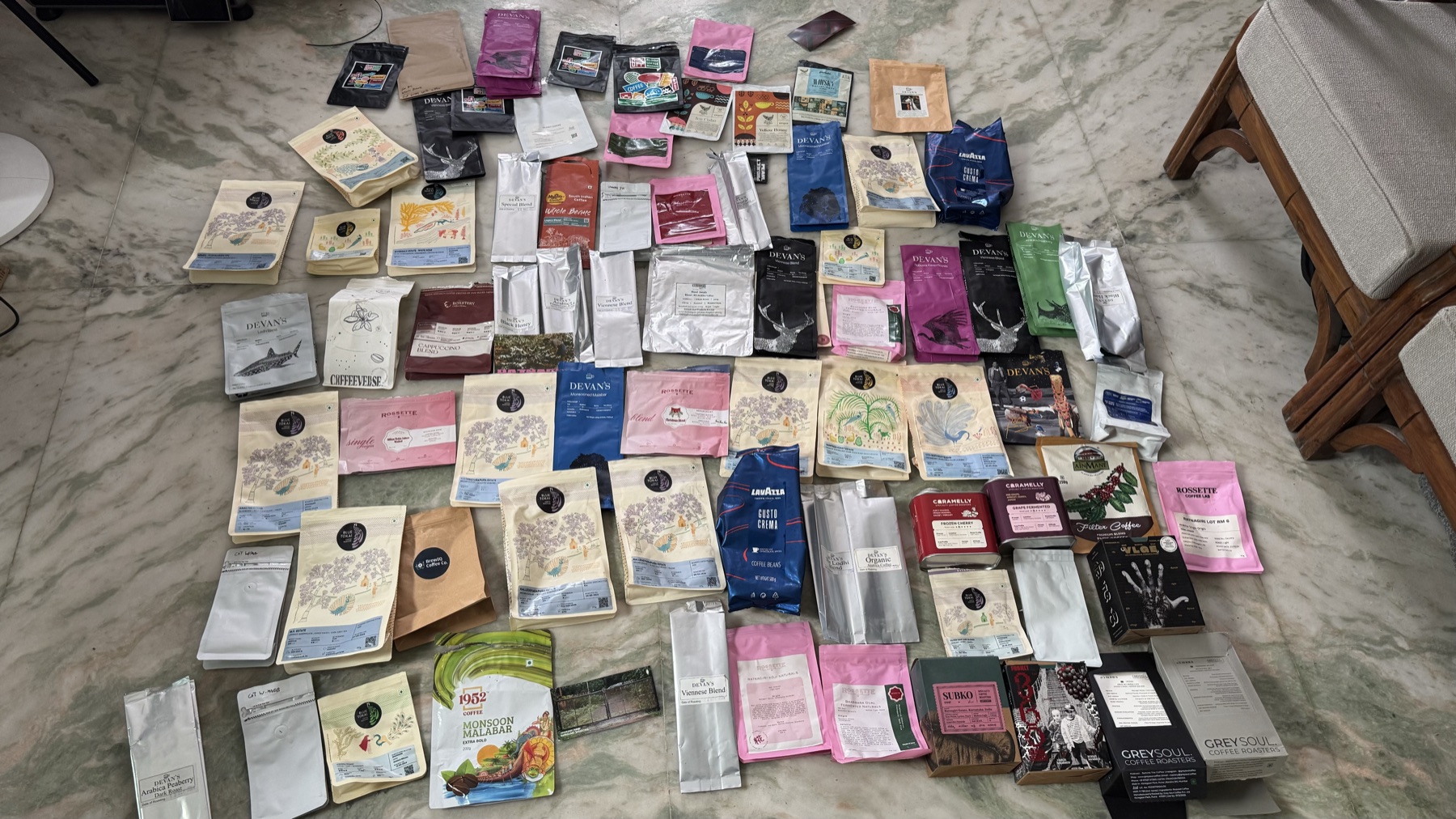
A few years of coffee, saved one bag at a time.
The nerdiness matters, but so does the ritual. My day starts with coffee. Later in the afternoon, there may be a second or third cup. Grinding, brewing, tasting, and sitting quietly for a moment are part of the rhythm of the day.
That combination is my qualification: sustained curiosity, practical experience at home, and a desire to share what I learn without pretending there is only one correct way to enjoy coffee.
Stories about coffee
Some of what you will find here is straightforwardly about coffee:
- Indian coffees and the roasters producing them
- Home brewing and extraction
- Espresso, filter coffee, and practical recipes
- Equipment that is genuinely useful
- Cafes, estates, and the people shaping Indian coffee
- Honest experiments, including the ones that do not work
The focus will remain close to home brewing because that is what I do. I do not own a cafe and I am not a commercial barista. I am interested in helping people make better coffee in ordinary kitchens, with realistic budgets and equipment they can actually live with.
Stories over coffee
The other half of Indian Coffee Stories is broader.
Coffee has always been a conversation starter. People meet over it to talk about politics, work, culture, relationships, inventions, and unfinished ideas. Coffee houses have historically acted as places where information and opportunity circulated. Lloyd’s insurance market, for example, traces its beginnings to Edward Lloyd’s coffee house in seventeenth-century London, where merchants and shipowners gathered for shipping intelligence.
Stewart Lee Allen’s The Devil’s Cup explores a provocative version of this idea: coffee does not simply accompany history; caffeine changes the alertness, energy, and decisions of the people making it.
The person before a cup and the person after it can feel slightly different. Coffee keeps us awake, sharpens a train of thought, and sometimes helps connect dots that were not connected before.
That is why this project will also make room for stories told over coffee: conversations and essays that begin with the cup but do not necessarily end there.
What to expect
I am not trying to become another coffee influencer built entirely around perfect slow-motion pours and expensive countertops. Beautiful images are welcome, but they are not the point.
The point is intelligent, accessible conversation. I want to help you understand Indian coffee, get more from the beans and equipment you already have, and make cups you are happy to serve to someone else.
The best coffees I remember are often the ones I shared with people I like. Making someone a cup, handing it to them, and seeing them enjoy it carries a satisfaction no gear upgrade can reproduce.
If that version of coffee appeals to you, watch and subscribe on YouTube and join the newsletter. There will be more stories about coffee, more stories over coffee, and plenty of practical guidance for brewing better at home.