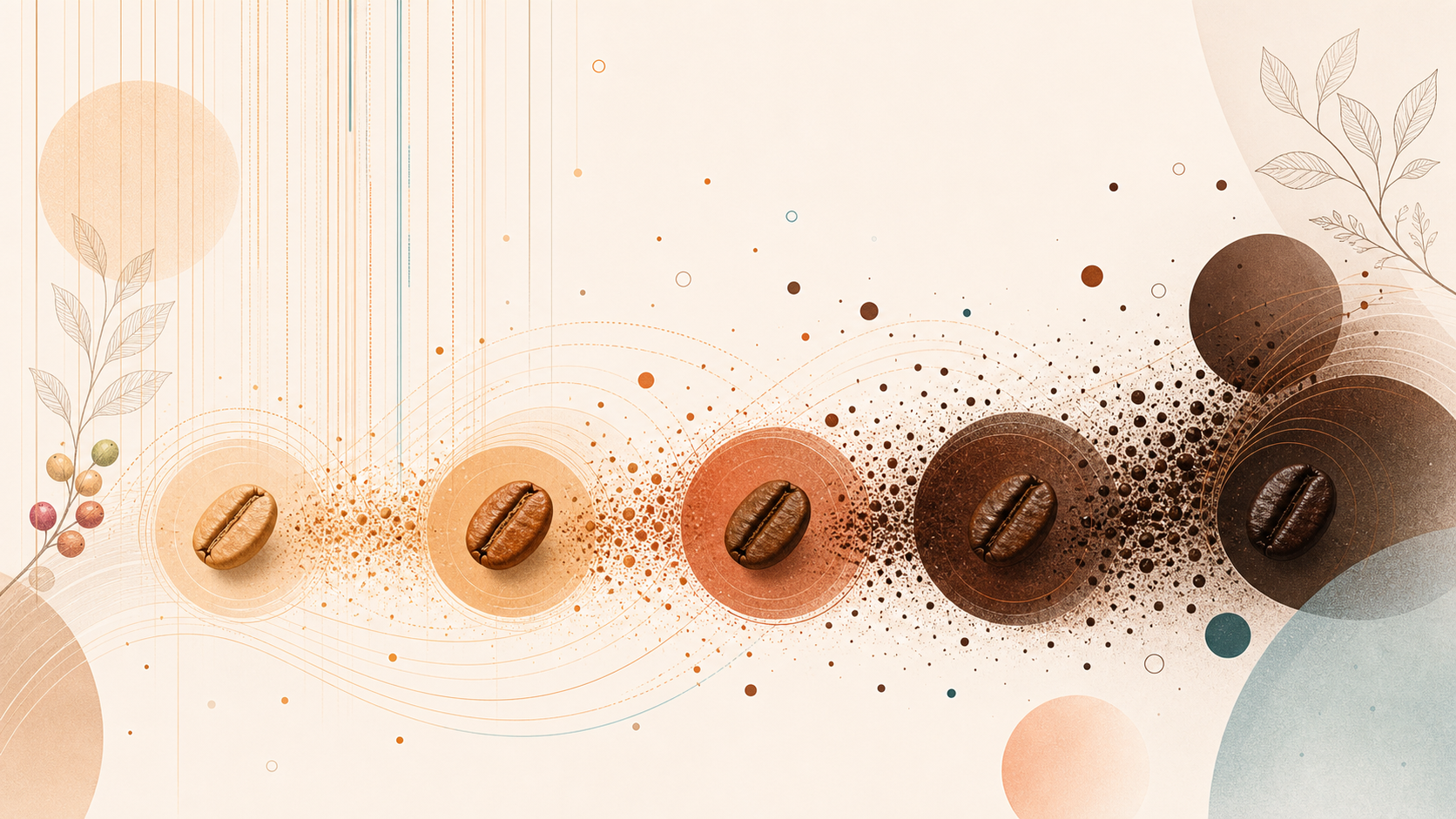
If you are staring at three bags labelled light, medium, and dark, the useful question is not, “Which roast is best?” It is, “Which one fits the coffee I actually want to drink?”
My short recommendation for most beginners is a medium-roasted blend from a reputable Indian roaster. It is usually balanced, reasonably forgiving, and versatile enough to help you work out whether you want to move lighter or darker next.
That recommendation is a starting point, not a rule. Your usual drink, brewer, flavour preferences, and willingness to adjust recipes matter more than coffee-community status.
If you first want to understand what roasting does to green coffee, why first crack matters, and why labels differ between companies, read What Are Coffee Roast Levels? A Simple Guide for Indian Specialty Coffee Beginners. This article handles the next step: choosing a bag.
Start with the drink you make most often
Coffee advice often begins with the bean. Buying advice should begin with your cup.
| What you usually drink | A sensible starting roast | Why |
|---|---|---|
| Black pour-over | Light to medium | Paper-filter brewers can show fruit, acidity, and origin character clearly |
| Black AeroPress | Medium, then explore either direction | The AeroPress is forgiving enough to work across roast levels |
| Espresso without milk | Medium to medium-dark | Easier to dial in than many light roasts while retaining sweetness and character |
| Cappuccino, latte, or flat white | Medium-dark or dark | Chocolate, nut, caramel, and roast flavours tend to remain clear through milk |
| South Indian filter coffee with milk and sugar | Medium-dark or dark blend | Body and roast character suit the traditional preparation |
| French press | Medium | A dependable balance of body, sweetness, and moderate acidity |
| “I have no idea yet” | Medium-roasted blend | A useful reference point that is neither extremely bright nor heavily roasted |
These pairings are practical rather than compulsory. You can make pour-over with dark coffee and espresso with a light roast. The table simply reduces the chance that your first bag fights the drink you wanted.
Choose by flavour, not prestige
Roast labels are rough clues. Tasting notes tell you more about the direction a roaster intends.
Choose a light roast if you want
- Fruit, flowers, citrus, or tea-like aromas
- Brighter acidity and clearer differences between coffees
- Black coffee rather than a milk-led drink
- A reason to experiment with grind, temperature, ratio, and contact time
Light roasting often preserves more of a coffee’s origin and processing character. It can also produce a sour, thin cup when the coffee is under-extracted. If you do not enjoy the first brew, that does not necessarily mean the bag is bad; it may need a finer grind, hotter water, or more contact time.
Choose a medium roast if you want
- A balance of acidity, sweetness, body, and roast character
- Familiar flavours alongside some fruit or origin character
- One bag that can move between several brewers
- The easiest entry point into freshly roasted specialty coffee
“Medium” is a broad and inconsistent label, but it remains my default beginner recommendation. It gives you a reference point. If the coffee feels too sharp, move darker next time. If it feels too roasty or generic, move lighter.
Choose a dark roast if you want
- Cocoa, toast, smoke, bitterness, or a heavier familiar cup
- Coffee that remains prominent through milk and sugar
- Traditional espresso or South Indian filter coffee flavours
- Lower perceived acidity rather than a bright, fruit-led drink
Dark roast is not failed coffee, and enjoying it does not make you less serious. I regularly prefer Devan’s Capi Robusta, Devan’s Vienna Roast, or Lavazza Gusto Crema for morning milk drinks. I have also disliked dark coffees that tasted oily, flat, and like old hotel coffee. Roast level describes a direction, not quality.
Match the roast to your brewer
V60 and other pour-over brewers
Start with light or medium coffee if you bought a pour-over brewer for clarity. A V60 can expose floral, fruity, and processing-led flavours beautifully. It can expose smoke and harshness just as clearly in a dark roast.
AeroPress
Start with medium and then experiment. The AeroPress works with light, medium, and dark coffee because you can change grind size, temperature, agitation, ratio, and immersion time. This flexibility is why I often recommend it as a first brewer.
Espresso
Start with medium-dark if you are new to dialling in espresso, particularly if you add milk. Lighter espresso can be excellent, but it often asks more of the grinder, machine, recipe, and person making it. You do not have to begin with the difficult option to prove anything.
South Indian filter coffee
Start with a medium-dark or dark blend designed for the method. Robusta and chicory may be part of the profile, depending on what you enjoy. The familiar preparation is rich for a reason; choosing a bright microlot does not automatically improve it.
If you use milk, read the tasting notes
Milk softens bitterness and acidity while adding sweetness, fat, and texture. Notes such as chocolate, nuts, caramel, jaggery, spice, and heavy body are usually safer indicators than the word “dark” alone.
Very light coffee can disappear in milk or create an unusual fruit-and-dairy combination. Sometimes that is interesting. Sometimes, as I found after making a light-roast cappuccino, it simply makes me wish I had used the familiar darker coffee instead.
If you mostly drink black coffee, fruitier light and medium roasts are easier to explore because milk is not masking their subtler aromas.
Do not trust the label by itself
One roaster’s medium can resemble another roaster’s dark. I once bought a Starbucks coffee labelled medium roast that tasted thoroughly dark compared with the Indian specialty coffees I was used to.
Most specialty roasters are not trying to mislead you; they are describing coffee relative to their own range. Before buying, consider:
- Roast level
- Tasting notes
- Recommended brew methods
- Acidity and body descriptions
- Whether the roaster recommends the coffee with milk
- How that company labels its other coffees
Very dark, shiny beans are often dark roasted, while pale, dry beans are more likely to be light roasted. Appearance is only a clue: lighting, photography, storage, and the coffee itself can all confuse the comparison.
What should a complete beginner buy?
Buy a medium-roasted blend in the smallest practical bag size, ideally from a roaster that provides a clear recipe. A blend is not a pile of inferior beans. A thoughtful blend is a recipe built for balance, consistency, value, or a particular brewing style.
If you can buy a sampler, that is even more useful. Contrast teaches faster than definitions. My Blue Tokai 5-in-1 Sampler Pack review explains what that format gets right and what to watch for before ordering.
You can find more Indian businesses to compare in the Coffee Atlas.
Run this three-bag experiment
If you want to learn your preference rather than accept mine, buy three small bags from the same roaster:
- One light roast
- One medium roast or blend
- One dark roast
Brew all three using the same device and starting ratio. Taste each while hot, warm, and cool. Then add a small, equal amount of milk to each.
Ask:
- Which aroma makes me want to drink the cup?
- Which coffee feels pleasantly bright, and which feels sour?
- Which feels pleasantly rich, and which feels harsh?
- Which works better with milk?
- Which cup do I actually finish?
After the comparison, adjust each recipe separately. The same recipe makes the first test easier to understand, but every roast will not taste its best under identical conditions. Record your changes in the Brew Tracker so preference becomes evidence rather than memory.
Quick answers before you buy
Is light roast better quality?
No. It may reveal more origin and processing character, but that is not the only valid reason to drink coffee. Roast quality, green coffee quality, brewing, and your preference all matter.
Is dark roast stronger?
It often tastes stronger because roast bitterness and smoke are obvious. That does not automatically mean it contains more caffeine or that your brewed drink is more concentrated.
What is the safest first choice?
A medium-roasted blend. It creates a useful baseline and usually works across more equipment and drink styles.
What if my light roast tastes sour?
Try grinding finer, using hotter water, or increasing contact time. Sourness can indicate under-extraction rather than an inherently bad coffee.
What if I only enjoy dark roast?
Then buy dark roast. Coffee is a daily pleasure, not a palate examination.
Choose for your real routine
Do not buy the roast that makes you look informed. Buy the roast that fits how you wake up, what equipment you own, whether you add milk, and which flavours make you return to the cup.
Start with medium if you are uncertain. Move lighter for more brightness and origin character. Move darker for more roast character, body, and compatibility with milk. Be prepared to enjoy and dislike coffees in every category.
For the deeper explanation behind those categories, continue with the linked guide to coffee roast levels in Indian specialty coffee.
Then use the beginner guide to brewing better coffee at home to adapt the recipe to the roast you chose rather than treating the label as a guarantee of flavour.